How Did I Not See It?
Oct 12, 2026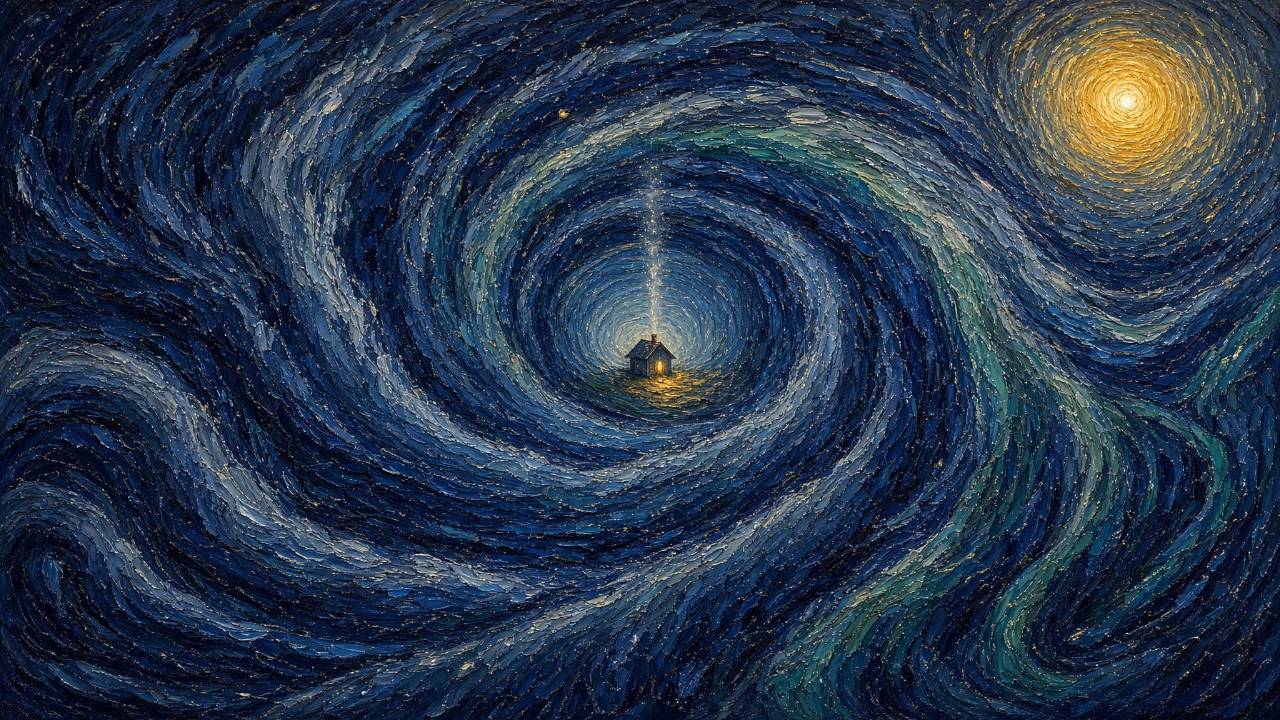
It's too much.
The person you love, more than anyone else on the planet, does something. Something unspeakable. Many times it's something you never dreamed possible. It never even occurred to you that it was possible. But as it happens, life sucks, then we die. (I wrote a whole article with that title once, so you know I'm not being flippant. I'm being precise.) It happens.
Reality hits like a mid-October Category 3 hurricane named Isaias. If you watched the news this month, you know exactly how fast one of those turns an ordinary week into wreckage. On Tuesday you're making school lunches. By Friday you're standing in what used to be your living room, trying to understand what the water took.
And then comes the part nobody warns you about. Days later, or months later, you walk back through the wreckage of your relationship, and suddenly you can see them. The signs. All of them, everywhere, lit up like a runway. The weekend that didn't add up. The password that changed. The feeling in your gut that you argued yourself out of, twice, because you were being "paranoid."
Which brings you, usually somewhere around 3am, to the question this article exists to answer.
How did I not see it?
This is the second article in my Safe Again series on betrayal trauma. If you missed the first one, start there, because it lays the foundation for everything we're about to do. Today we're walking into the question that produces more shame than almost any other part of betrayal, and I'm going to show you why the answer is nothing like what you've been telling yourself.
The Weather Satellite
First, let me tell you about my job.
One of the things I often tell clients is that I get to be a weather satellite for them. I can see the patterns because I'm flying very high overhead, looking down. I'm not in the storm, where the wind is terrifying and the house is shaking and the roof and the walls are creaking and you're hearing sounds you've never heard before. From inside the house, there is no pattern. There is only the next terrifying noise.
But I get to sit way up in the silence, where the whole storm fits on one screen. From up there, the spiral is obvious. The track is mappable. I can see where the storm has been and where it's probably going, not because I'm smarter than the person in the house, but because altitude is the whole job. The satellite doesn't out-think the storm. It just isn't standing in it.
I want you to hold onto that picture, because it's going to answer the 3am question. And for the record, before anyone mistakes me for someone who's only ever watched storms from orbit: I have been inside the house too. That's all I'll say about that here, but I need you to know this article isn't written from a safe distance. It's written by someone who knows what the walls sound like.
The 3am Question
Here's how the question actually arrives. It doesn't come alone. It comes with a gavel.
"How did I not see it? The signs were EVERYWHERE. What is wrong with me?"
And then the shame engine roars to life and starts handing down verdicts: I'm so stupid. Pathetic. Weak. Everyone else probably saw it. My mother probably saw it. The neighbor's dog probably saw it. I must have wanted to be deceived. I must be the kind of person this happens to.
I have sat with hundreds of betrayed people, brilliant people, sharp people, people who catch everything at work and miss nothing in their kids, and nearly every one of them has handed me some version of that verdict about themselves. So before we go one step further, let me go on record: the verdict is wrong. Not partially wrong. Wrong the way a map of Kansas is wrong about Colorado.
But you don't need me to just say it. You need to understand it. So let's take the detour your brain has probably already been taking for months.
The Understanding Trap
Part of what makes betrayal so disorienting is that many times the person did something you would never consider doing yourself. That's not a small detail. It means the behavior doesn't exist on your map of how humans work. It doesn't make sense. How? How could they?
So we try to wrap our minds around it. "If only I could understand why, then maybe it would stop hurting." The questions become immense. Overwhelming. We investigate. We re-read. We reconstruct timelines like detectives. Because somewhere underneath, we believe understanding will ease the pain.
Here's the hard truth I watch people learn over and over: it never does. The more we know, the more we find out, the worse it all gets. Because those questions were never really asking for information. They were asking for something no answer can deliver: they were asking for this to not have happened. Understanding why the storm formed does not un-flood your house.
I'm not saying truth doesn't matter. In the first article I made the case that full truth, delivered once, matters enormously. I'm saying the compulsive hunt for one more detail is not the road to peace, and if you've noticed that every new discovery makes you feel worse instead of better, you're not doing it wrong. That's just what that road is.
Blindness Is Not Weakness
Now the real answer to the 3am question, and it has a name.
Dr. Jennifer Freyd, the researcher who gave us the term betrayal trauma, also gave us a second term: betrayal blindness. It's the not-seeing, the not-knowing, the explaining-away that people do in the face of betrayal. And here is her field's conclusion, the one I need you to receive all the way down: betrayal blindness isn't weakness. It's protection.
Think about what we're actually describing. We are not talking about something small that happened to you. We are talking about the worst moments of your life, and a nervous system doing its absolute best to protect you from them. Your whole life was built on that relationship. Your home, your kids, your money, your future, your church, your idea of who you are. Fully seeing the betrayal meant watching all of it catch fire at once. No nervous system on earth volunteers for that. So yours did what loyal nervous systems do: it dimmed the alarm. It looked the other way. It refused, for a while, to accept life as it really was.
That's not a character flaw. That's a load-bearing wall holding up a house in a hurricane.
The Loyal Mind at Work
And let me tell you, the loyal mind is a gifted novelist.
I once sat with a man who had constructed, by his own count, eleven separate explanations for a single hotel charge. Eleven. The man could have published a short story collection. The phone that always needed to charge face-down in another room? "She just hates clutter on the nightstand." The gym membership that suddenly required attendance at 9pm on Tuesdays? "Self-care. The podcast said to support it." The perfume on a collar? "His coworker is European. They hug."
I'm smiling as I write that, and I hope you're able to smile a little too, because here's the thing: I'm not making fun of those explanations. I'm honoring them. Every single one was built by a mind that loved somebody and was trying to keep a family alive. The gymnastics weren't stupidity. They were devotion doing engineering. If anything, the creativity of your explanations is evidence of how much you loved, not how little you saw.
The person in the house isn't a fool for not seeing the spiral. The spiral is only visible from the satellite. And you, friend, were not in orbit. You were in the living room, holding the walls up.
Where the Wiring Comes From
Here's the part that usually drops the last of the shame.
Freyd didn't develop this theory studying marriages. Her original research was about children abused by the very caregivers they depended on to survive, and why those children's minds minimized, excused, or genuinely forgot what was happening. A child cannot afford to fully know that the hand that feeds them also harms them. Knowing would sever the attachment they need to stay alive. So the mind protects the bond by dimming the knowledge.
That's the wiring you and I inherited. You didn't invent this strategy as an adult because you're weak. It shipped with the equipment, installed at the factory, designed for exactly one job: protecting your most essential attachments at almost any cost. When the betrayal came through your most essential attachment, the system did precisely what it was built to do.
You are not broken for having run the program. You're human for having it installed.
Blind Because You Loved
Which brings me to the truest sentence in this whole article.
Oftentimes, blindness comes out of love. You are a loving person, and you wanted to believe. Because accepting the truth might end the relationship. Because seeing clearly would mean seeing something about someone you love that you can't unsee. So we lie to ourselves, gently, daily. We keep hoping change will come. An awakening. Repentance. Healing. Restoration. We extend one more season of benefit-of-the-doubt, because that's what love does, and love is what we're good at.
And I have to be honest with you the way I'd want someone to be honest with me: for many people, that awakening never shows up. That's the grief inside this article, and I won't dress it up. Hoping was not foolish. But there comes a point, and the first article's fork-in-the-road question will help you find it, where hope has to stop doing the seeing for you.
You weren't blind because you're a fool. You were blind because you loved, and because you had everything to lose. Read that again, slower. Then let it take some weight off your shoulders, because you've been carrying a verdict that was never yours to serve.
You See When You Can Survive the Seeing
One more gift before the practice, because this one reframes the timeline you've also been beating yourself up about.
Have you noticed that the fog tends to lift in proportion to your strength? People almost always start seeing clearly when something shifts: a safe friend shows up, a little money gets saved, a counselor enters the picture, the kids get older, God gets louder. That's not coincidence. The knowing arrives when you can finally carry it. Your mind wasn't just protecting you from the truth. It was waiting with the truth until you could survive it.
Jesus did exactly this with the people He loved most. The night before the cross He told His disciples, "There is so much more I want to tell you, but you can't bear it now." (John 16:12, NLT) Sit with that. The most honest man who ever lived paced the truth to the capacity of the people receiving it. Not because truth doesn't matter, but because He loved them too much to crush them with it. If Jesus measured revelation against what hearts could bear, then maybe the timeline of your seeing wasn't failure either. Maybe it was mercy, moving at the speed of your strength.
A Practice for This Week
This week I want you to write a short letter. Not to the person who betrayed you. To the you who didn't see it.
Picture that earlier version of yourself, in the living room, holding up the walls, building the explanations. Then write to them with the same compassion you'd give a dear friend who'd been through what they went through. Tell them what you now understand about why they couldn't see. Tell them what their blindness was protecting: the home, the kids, the hope. Thank them for loving so hard. And tell them the one thing they need to hear from you specifically, because yours is the only verdict they've been waiting on: it wasn't your fault that you couldn't see it.
Then, once a day this week, when the shame engine starts the old chant, stupid, pathetic, weak, interrupt it with one sentence, out loud if you can: "I wasn't blind because I'm a fool. I was blind because I loved."
If the Fog Is Lifting Right Now
If you're reading this in the middle of the seeing, when the signs are lighting up and the ground is moving, please don't walk through it alone. This is exactly what my three-hour trauma coaching sessions are for: a safe place to lay the whole storm on the table with someone who's flown over a few hundred of them, and been in the house besides. You can book your session here, or just text me at (303) 435-2630 or email [email protected]. And if weekly support fits your life better, Reagan Smalley, our clinically trained coach, walks with people through exactly this: smalleyinstitute.com/reagan-smalley.
No details needed in the comments, just this: if you could say one word to the you who didn't see it, what would it be? Grace. Forgiven. Loved. Free. Your word might be the one somebody else's 3am has been waiting for.
Discover the hidden relationship killer destroying most marriages (and how to stop it).
Join me twice a week for real transformation!
I'll send you proven strategies for your marriage, spiritual growth, trauma healing, and recovery. No generic advice—just what actually works from 30+ years in the trenches.
I hate SPAM. I will never sell your information, for any reason.