You Can't Make Deals With the Storm. I Know Because I Tried.
Jul 10, 2026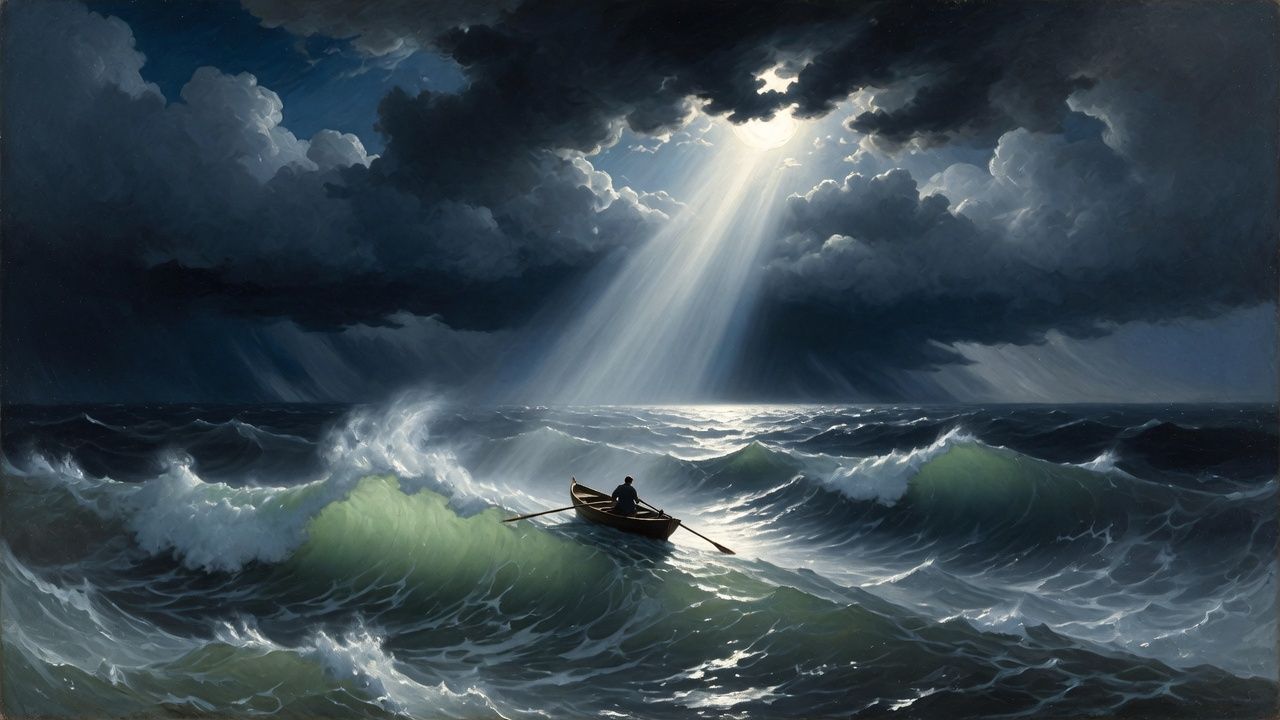
Somewhere in the middle of the Pacific Ocean, in the dark, a 32-year-old woman was rowing and crying at the same time.
Her name is Kelsey Pfendler. Her boat, Lily, was about 24 feet long, roughly the size of a parking space. She was alone, unsupported, more than a thousand miles from anyone, trying to become the first American woman to row solo from California to Hawaii. And the wind would not stop.
In an interview afterward, she described it like this: "I'm just talking to the wind trying to convince it to stop blowing." She was making bargains with weather. Negotiating with something that couldn't hear her and wouldn't have cared if it could.
On July 3rd, she rowed into Honolulu's Ala Wai Boat Harbor to a crowd of hundreds. Forty-three days, seventeen hours, and fifty-five minutes after leaving Monterey. First American woman to do it solo. Youngest person to do it. And here's the part that made me sit up: fastest person, period. She didn't just break the women's record. She beat the men's record by more than a week.
And on SportsCenter, when they tried to call her fearless, she corrected them. She said that's not a great way to describe it, because bravery can't exist without fear.
I nearly dropped my coffee. That has been my life motto for years. Courage was never the absence of fear. It's what you do while the fear is still sitting in the boat with you.
The Storm I Ordered for Myself
I've never rowed an ocean. But I know exactly what it feels like to cry and row at the same time.
In May of 2019, I set a boundary I had been avoiding for years. I won't drag you through the details, because the details aren't the point. The point is that I had spent most of my life practicing what I now call my signature sin: passivity. I avoided hard things. I kept the peace instead of telling the truth. And I avoided that boundary for so long because I was afraid of exactly one thing: that doing the right thing would make everything worse.
You want to know the frustrating part? I was right.
I set the boundary, and the storm hit. Fast and hard, the way storms do. It became the hardest season of my entire life, and I've had some seasons. My circumstances felt genuinely dangerous, emotionally and spiritually. And I knew, the way you know things in your soul and not just your head, that if I ignored my own health and tried to avoid this thing one more time, it would destroy me.
So I did what I tell everyone else to do. I reached out for help.
I started calling therapists. Licensed professionals in my area. And because of my line of work, I had to be careful: I needed someone I didn't know personally and hadn't trained. So I called strangers. I left voicemails. Real ones, honest ones.
Not one of them called me back.
Not a single one. Read that again, because I want you to feel the dark comedy of it. A guy with a doctorate in psychology, drowning, doing the healthy thing, following his own advice, and the phone just... never rang.
Bargaining With the Wind
By mid-June I was so damaged and so much in pain that I finally took my frustration to the only One left on the list.
I got angry with God. Not polite, church-lobby frustrated. Angry. Demanding. Crying out in the middle of my storm and hearing nothing back. It was visceral, and honestly, it's still not the easiest thing for me to share. It was a true Dark Night of the Soul, and in the middle of it I found myself connecting to words Jesus Himself cried out: "My God, my God, why have you abandoned me?" (Matthew 27:46, NLT)
Here's what I learned in that darkness, and it's the thing I most want you to take from this article. Both things were true at the same time. I felt completely forsaken. And God was already there, already providing, already moving a specific person toward me who would help save my life. The answer just hadn't arrived yet. I was bargaining with the wind, and the wind wasn't answering, and the whole time the harbor was already being prepared.
And there's one more piece I have to own, because this is where I stopped saying "take personal responsibility" and started saying "take radical responsibility." When I looked back honestly at that season, I could see that God had been trying to connect me with that man for a while. And I had sabotaged some of His efforts. My passivity, my avoidance, my fear of making things worse: they hadn't just delayed my boundary. They had delayed my rescue.
Radical responsibility means I don't just own my reactions. I own my part in the silence too.
She'd Been in Darker Water Before. On Land.
Here's where Kelsey's story goes somewhere I didn't expect.
She wasn't rowing for glory. She was rowing to raise money for something called the Whale Foundation. Her original goal was modest, but by the week I wrote this, donations had climbed past $200,000 and were still rising. I'd never heard of the foundation, so I dug in. What I found stopped me cold.
Kelsey spent a decade as a river guide in the Grand Canyon. She wasn't a sponsored elite athlete with a trust fund. She worked overnight shifts as an emergency room technician to fund the row. Her words: not independently wealthy, worked her butt off, did fundraisers for everything she had. And somewhere along the way, in an interview she gave, she shared that during her own mental health crisis, it was the Whale Foundation that connected her with a specialist who helped her.
The Whale Foundation exists because of a man named Curtis Hansen. "Whale" was his river nickname, earned the way all the best river nicknames are, and he was a legendary Grand Canyon boatman, a Vietnam veteran, and a man deeply loved by his community. He was also a man carrying wounds home from a war, the kind of wounds this community understands. In 1995, after leaving the guiding life he loved, Whale took his own life.
I want to handle this part with the tenderness it deserves, because I've written before about my own close brush with that darkness, and I know some of you reading this have stood nearer to that edge than anyone around you realizes. If that's you, please hear me: you matter, staying matters, and help is real. You can call or text 988 any time, day or night.
Here's what Whale's friends did with their grief. They refused to let it be the end of the story. They founded the Whale Foundation in his memory so that no river guide would ever again feel like there was nowhere to turn. Today the foundation provides hundreds of free, confidential counseling sessions every year to the Grand Canyon guiding community.
Whale never got his rescue. Kelsey did. And then she got in a 24-foot boat and rowed 2,400 miles of open ocean so the lifeline that saved her stays funded for the next guide in dark water.
Friends, that is the wounded healer story in its purest form. Pain, transfigured into provision. The healed becoming the healer. A community that decided grief would become a lifeline.
The Most Dangerous Water Isn't the Rapids
One detail from the Whale Foundation's work has been rattling around in my chest for days.
The most dangerous season for river guides isn't the whitewater. It's the transition. It's the end of the season, when the camaraderie and purpose evaporate overnight, when everyone scatters, when the adrenaline stops and the quiet starts. Whale himself didn't die on the river. He died after leaving it.
I see this exact pattern in my office constantly. People survive the crisis. They white-knuckle through the affair discovery, the diagnosis, the separation, the funeral. Everyone around them says how strong they are. And then, three months later, in the quiet, when everyone assumes they're fine, they fall apart.
The storm isn't always the most dangerous part of your story. Sometimes it's the harbor.
Kelsey said something after her row that captures this better than any textbook: there's a version of her that only exists out on the water, and part of her grieves that she'll never get to be that person again. Suffering forges versions of us that only live inside the suffering. If you've ever felt strangely lost after surviving something, you're not broken. You're in the transition. And the transition needs just as much support as the storm did.
Strong Enough to Start
One more thing Kelsey said, and then I'll tell you what to do with all of this. She encourages people to find their own big, hard, scary thing, and says you may not feel strong enough to finish it, but "you're definitely strong enough to start it."
You are not rowing to Hawaii. But some of you are staring down something that feels 2,400 miles wide. A boundary you've avoided for years because you're afraid it will make things worse. A phone call to a counselor. A conversation with your spouse that your whole body is bargaining with God to avoid.
Here's the truth from someone who set the boundary and got the storm anyway: yes, it might get worse before it gets better. Mine did. The storm was real, the silence was real, and the rescue was also real, already in motion, the entire time I was screaming at the wind.
Bravery can't exist without fear. And resilience, as Kelsey put it, is messy. It cries while it rows. It bargains with weather. It leaves voicemails nobody returns. And it keeps pulling the oars anyway, because the direction still matters even on the days the progress doesn't show.
A Practice for This Week
Name your ocean. Get honest about the one big, hard, scary thing you've been avoiding because you're afraid doing it will make things worse. Write it down in a single sentence.
Then take radical responsibility for one small thing: not the whole crossing, just the leaving of the harbor. One phone call. One honest sentence spoken out loud. One voicemail, even if nobody calls back the first time. You are not required to be strong enough to finish it this week. You're only required to be strong enough to start it.
And if you're in the transition right now, the quiet after your storm, don't mistake the silence for safety or for abandonment. Tell one person the truth about how you're actually doing. The most dangerous water is the water we cross alone.
If You're Ready to Go Deeper
If this article found something in you, the storm, the silence, the bargaining, the transition nobody warned you about, this is exactly why I wrote You're Not Crazy, You're Traumatized. It's the book I needed in June of 2019 when nobody was calling me back. The audio course walks you through it in my own voice, one honest step at a time.
Get the You're Not Crazy, You're Traumatized audio course here
And if you'd rather just talk to a real human first, I get that more than you know. Text me at (303) 435-2630 or email [email protected].
What's your ocean? The big, hard, scary thing you know you're strong enough to start? Drop it in the comments. Naming it out loud is the first pull of the oars.
Discover the hidden relationship killer destroying most marriages (and how to stop it).
Join me twice a week for real transformation!
I'll send you proven strategies for your marriage, spiritual growth, trauma healing, and recovery. No generic advice—just what actually works from 30+ years in the trenches.
I hate SPAM. I will never sell your information, for any reason.