How to Love a Lion, an Otter, a Golden Retriever, and a Beaver (Without Losing Your Mind)
Mar 30, 2026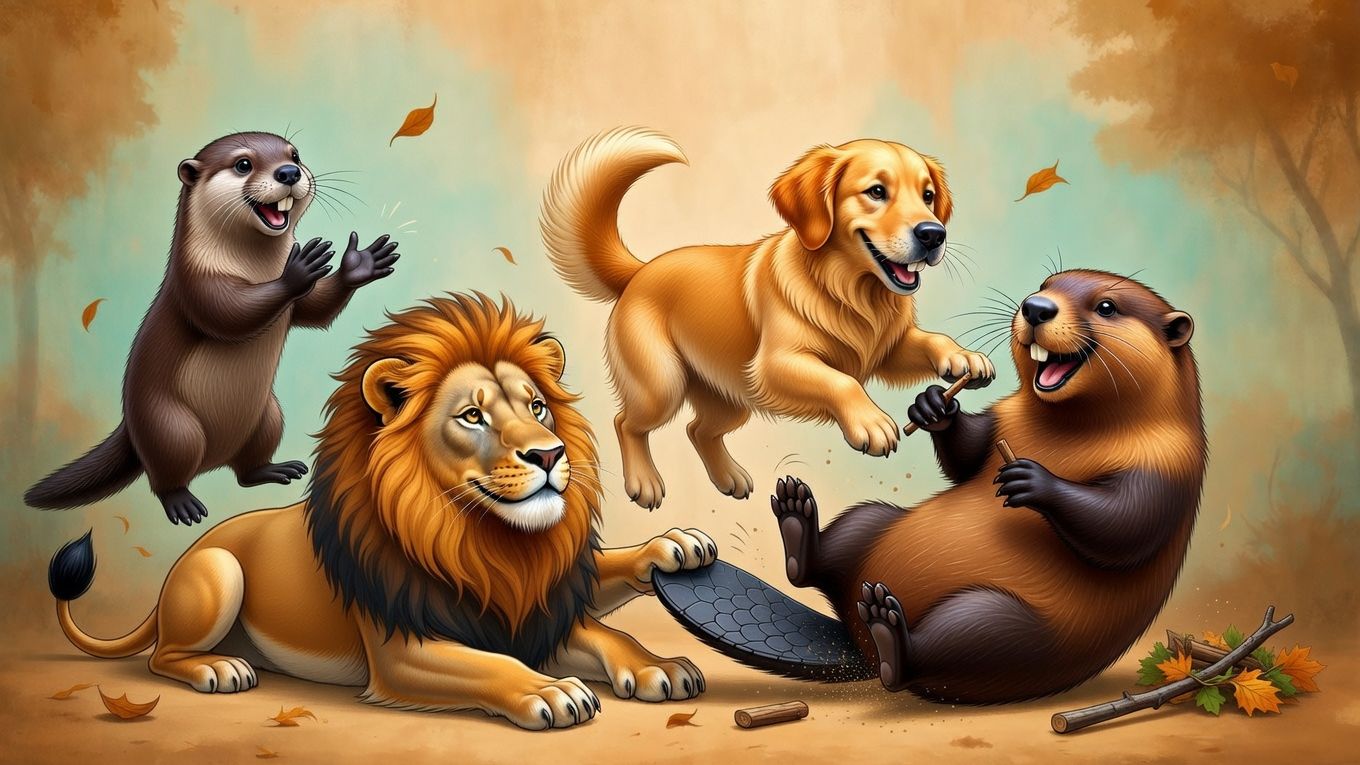
Marcus sat across from me on a video call, looking like a man who had tried everything and was running out of ideas.
"I love my wife," he said. "I really do. But I have no idea how to make her happy."
His wife, Jenna, is a Beaver. She's brilliant. Organized. Thoughtful. She remembers every detail of every conversation they've ever had. She plans vacations with spreadsheets. She folds towels in thirds because that's the way they fit best in the linen closet, and she's right, they do.
Marcus is an Otter. He's fun, spontaneous, and full of energy. He once surprised Jenna with a weekend trip he booked two hours before their flight. He thought it was romantic. She nearly had a panic attack.
"She gets upset about things I don't even notice," Marcus told me. "I left my shoes by the door and you'd think I committed a felony. I suggested we skip the budget meeting this month and she looked at me like I suggested we sell the children."
I laughed. Because I've heard some version of this conversation hundreds of times.
"Marcus," I said, "you don't have a bad marriage. You have an untranslated one. You're speaking Otter. She's speaking Beaver. And neither of you brought a dictionary."
Here's what thirty years of working with couples has taught me: most people love their spouse the way THEY want to be loved. Not the way their spouse actually needs to be loved.
It's not selfish. It's just human. You give what feels natural to you. The problem is, what feels natural to you might feel completely foreign to them.
So consider this article your relationship dictionary. Your owner's manual. Your field guide to the four personality types and what each one actually needs from you.
If you don't know your personality type yet, stop right now and take the free Smalley Animal Personality Assessment. Five minutes. It might be the most helpful five minutes you spend on your relationship this year.
Got your results? Good. Now find your spouse's type below. And prepare to finally understand what they've been trying to tell you all along.
How to Love a Lion
Lions are your take-charge, get-it-done, lead-the-way personality. They're decisive, confident, bold, and competitive. They see a problem and they want to solve it. Now. Not after we talk about our feelings. Now.
Lions are the ones who walk into a room and assess what needs to happen. They're the ones who take charge at restaurants when the group can't decide where to sit. They're the ones who have already solved the problem before you've finished describing it.
And that's exactly what makes them hard to love sometimes.
Because if you're married to a Lion, you've probably felt steamrolled at least once this week. You've probably had the experience of sharing something vulnerable and watching them shift immediately into fix-it mode. You've probably wondered if they even care about your feelings or if they just want to check "listen to spouse" off their to-do list.
Here's what you need to know: Lions are not trying to dismiss you. They're trying to help you. In their mind, solving the problem IS loving you. Letting you sit in pain without offering a solution feels cruel to them. They're not ignoring your heart. They're trying to protect it the only way they know how.
What a Lion needs from you:
Respect their competence. Lions need to know you trust their ability. When you second-guess every decision or micromanage their approach, it doesn't feel like partnership to them. It feels like you don't believe in them. And for a Lion, that cuts deep.
Give them the bottom line. If you need to talk about something, give them the headline first. "I need to process something with you, and I don't need you to fix it. I just need you to listen." That one sentence changes everything for a Lion. They're not wired to sit in ambiguity, so telling them what you need up front helps them relax into the conversation instead of scrambling for solutions.
Don't mistake their directness for coldness. A Lion who says "here's what I think you should do" is saying "I love you" in Lion language. It might not sound warm and fuzzy. But for them, offering their best thinking IS warmth.
Let them lead sometimes. Lions wither when they feel controlled or boxed in. They need areas of ownership, places where they get to make decisions and run with them. That doesn't mean they get to dominate everything. It means they need room to be who God made them to be.
Challenge them. Lions respect strength. If you always fold, always defer, always avoid conflict, a Lion will lose respect for the relationship. Not because they're mean, but because they need a partner, not a follower. Stand your ground when it matters. They'll actually love you more for it.
How to Love an Otter
Otters are your fun-loving, energetic, life-of-the-party personality. They're spontaneous, enthusiastic, optimistic, and verbal. Very, very verbal. An Otter can turn a trip to the grocery store into an adventure and a thirty-second story into a fifteen-minute saga. And somehow you don't mind because they make it entertaining.
Otters light up rooms. They know everyone. They're the ones making people laugh at the dinner party, starting the group text, planning the surprise birthday, and volunteering for things before thinking about whether they have time.
And that's exactly what makes them hard to love sometimes.
Because if you're married to an Otter, you've probably watched them commit to something without consulting you. You've probably waited for them to follow through on a project they were wildly excited about three weeks ago and have now completely forgotten. You've probably wondered if they take anything seriously.
Here's what you need to know: Otters are not being irresponsible. They're being optimistic. They genuinely believe they can do it all. They're not ignoring the details out of laziness. They honestly don't see them. Their brain is wired to see the big picture, the possibilities, the fun. The fine print is genuinely invisible to them.
What an Otter needs from you:
Approve of them. This is the big one. Otters run on approval the way Lions run on respect. When you criticize an Otter, especially in front of other people, it devastates them. They might laugh it off. They might crack a joke to deflect. But inside, they're crushed. They need to know you're proud of them, that you think they're fun, that you enjoy them.
Let them talk. Otters process out loud. They don't know what they think until they hear themselves say it. If you cut them off, shut them down, or give them the "get to the point" face, they feel dismissed. You don't have to match their energy. Just let them be expressive without making them feel like it's too much.
Don't try to contain them. An Otter in a box is a miserable Otter. They need variety, social connection, new experiences, and room to be spontaneous. If every day looks exactly the same, they'll start to feel like they're suffocating. Build some flexibility into the routine. It matters more than you think.
Help them with follow-through without shaming them. Otters start strong and fade fast. That's not a character flaw. That's their wiring. Instead of "you never finish anything," try "you had a great idea with that project. Want help figuring out the next steps?" Same concern. Completely different message.
Have fun with them. This sounds simple but it's where a lot of spouses miss it. Otters need play. They need laughter. They need adventures, even small ones. If you've become the serious one who keeps everything running while your Otter spouse has all the fun, resentment will build on both sides. Join them sometimes. Let yourself be silly. They're inviting you into joy. Take the invitation.
How to Love a Golden Retriever
Golden Retrievers are your warm, loyal, steady, peacemaking personality. They're the best listeners you'll ever meet. They're patient, empathetic, and deeply relational. They remember how you felt about something you mentioned in passing six months ago. They're the ones who notice when someone at the party looks uncomfortable and quietly go stand next to them.
Golden Retrievers are the glue in most relationships. They hold things together. They absorb pain to keep the peace. They adapt. They accommodate. They put your needs ahead of their own so consistently that you might forget they have needs at all.
And that's exactly the problem.
Because if you're married to a Golden Retriever, you might have no idea they're struggling. They won't tell you. Not because they're being passive-aggressive (okay, sometimes that's exactly what it is). But because they genuinely fear that expressing their needs will create conflict. And conflict, for a Golden Retriever, feels like the relationship is in danger.
Here's what you need to know: Golden Retrievers are not weak. They're scared. Their silence isn't agreement. It's self-protection. They've learned that keeping the peace is safer than speaking up, even when the "peace" is slowly destroying them from the inside.
What a Golden Retriever needs from you:
Make it safe to speak. This is the single most important thing you can do for a Golden Retriever. Create an environment where honesty doesn't lead to conflict. When they do tell you something hard, don't react. Don't defend. Don't explain. Just listen. If you blow up every time they share honestly, they'll stop sharing. And you'll think everything is fine. It won't be.
Ask them what they need. Golden Retrievers won't volunteer this information. You have to go get it. "What do you need from me right now?" is one of the most loving questions you can ask a Retriever. They might not answer right away. That's okay. They're not used to being asked. Give them space to think about it.
Don't mistake their loyalty for limitless capacity. Just because a Golden Retriever keeps showing up doesn't mean they're okay. They will absorb pain long past the point where someone else would have spoken up or walked away. Check in on them. Not with a generic "how are you?" They'll just say "fine." Try "I noticed you've been quiet lately. What's going on in your heart?" Specific questions get honest answers.
Appreciate them out loud. Golden Retrievers serve quietly. They don't demand recognition. But they notice when their service goes unacknowledged. A simple "I see how much you do for this family and I don't want you to think I don't notice" can fill their tank for a week.
Protect them from themselves. Golden Retrievers will say yes to everything and everyone until they collapse. They need a spouse who says "you've done enough" and means it. Who takes things off their plate without being asked. Who gives them permission to rest without guilt.
How to Love a Beaver
And now we get to the Beavers. My friend Marcus's wife Jenna. The personality type that is probably the most misunderstood of all four.
Beavers are your detail-oriented, quality-driven, by-the-book personality. They're precise, analytical, deliberate, and conscientious. They read instruction manuals. They notice when the picture frame is crooked. They care deeply about doing things the right way, not because they're rigid, but because quality matters to them in a way that's hard to explain to people who don't share that wiring.
Beavers make things work. Behind every smooth-running household, organized event, accurate budget, and well-maintained vehicle, there's usually a Beaver who made it happen while everyone else was having fun.
And they're tired.
Because if you're married to a Beaver, you might have mistaken their standards for criticism. Their attention to detail for controlling behavior. Their desire for order for a lack of spontaneity or warmth.
Here's what you need to know: Beavers are not trying to control you. They're trying to create quality. When your Beaver spouse points out that the dishes aren't fully clean, they're not saying you're a failure. They're saying quality matters to them. That's a value, not an attack. And the fact that they care about the details of your shared life? That's actually love in Beaver language.
What a Beaver needs from you:
Respect their standards without taking them personally. This is the big one. When a Beaver says "that's not quite right," they're not saying YOU'RE not quite right. They're talking about the thing, not the person. But most people hear criticism when a Beaver is actually just being precise. Ask yourself: are they attacking me, or are they caring about quality? Ninety percent of the time, it's the second one.
Give them information and time to process. Beavers don't do well with surprises. They need data. They need time to think. If you spring a big decision on them and expect an immediate answer, they'll either shut down or push back. Not because they disagree, but because they haven't had time to think it through properly. Give them the information ahead of time. Let them process. They'll come back with a thoughtful response that's actually worth waiting for.
Acknowledge their contributions. Beavers do the work nobody notices. The bills are paid, the oil is changed, the insurance is updated, the taxes are filed. They rarely get thanked for this because it's invisible work. But they notice. And over time, the lack of acknowledgment builds into resentment. "Thank you for keeping everything running" goes a long way.
Don't dismiss their concerns as "overthinking." When a Beaver raises a concern, they've already thought about it from twelve angles. Telling them they're overthinking invalidates their entire mental process. Instead try, "Help me understand what you're seeing that I'm not." That tells them their analysis is valued. And it might save you from a mistake you didn't see coming.
Bring them warmth. This is where Beavers need the most growth, and where they need the most help. Beavers feel deeply but express it through action, not words. They show love by doing things right, not by saying "I love you" fourteen times a day. But they also need warmth coming back at them. Physical affection. Words of encouragement. Playfulness. They won't ask for it. But they need it. The Beaver who seems most buttoned-up might be the one who is most starved for tenderness.
The Real Secret
Here's what Marcus figured out, and what I hope you'll take from this article: loving someone well doesn't mean loving them the way that comes naturally to you. It means learning to love them in the language they actually speak.
Your Lion doesn't need more affection. They need more respect and trust.
Your Otter doesn't need more structure. They need more approval and freedom.
Your Golden Retriever doesn't need more attention. They need more safety to be honest.
Your Beaver doesn't need more fun. They need more acknowledgment and warmth.
It's not that hard once you see it. But you have to see it first.
And the beautiful thing? When you start loving someone in their language instead of yours, something shifts. They feel seen. Maybe for the first time. And when people feel seen, they soften. They open up. They start loving you better too. Not because you demanded it. But because you went first.
That's what I've watched happen in couple after couple, year after year. The person who goes first doesn't lose. They lead.
Don't know your personality type yet? Take the free Smalley Animal Personality Assessment. Five minutes. Do it with your spouse. Then come back and read each other's section out loud. The conversation that follows might surprise you both.
Want to keep growing? This is exactly the kind of work we do inside the Smalley Sojourners community. Twice a week, we meet live and dig into the stuff that actually changes relationships. Not theory. Not lectures. Real conversations about real life with people who are doing the work alongside you.
- ✅ Twice-weekly live coaching with me (Tues/Fri 7-8am CST)
- ✅ 30 minutes of private coaching each month
- ✅ Complete course library (including the full personality course)
- ✅ WhatsApp community that has your back
You can also text me at (303) 435-2630 or email [email protected].
Which personality type is hardest for you to love well? What's one thing from this article you want to try this week? Share in the comments. Your honesty might help someone else see their spouse differently today.
Discover the hidden relationship killer destroying most marriages (and how to stop it).
Join me twice a week for real transformation!
I'll send you proven strategies for your marriage, spiritual growth, trauma healing, and recovery. No generic advice—just what actually works from 30+ years in the trenches.
I hate SPAM. I will never sell your information, for any reason.