The Fondue Fork Through My Hand (And Why Traditions Matter)
Dec 20, 2025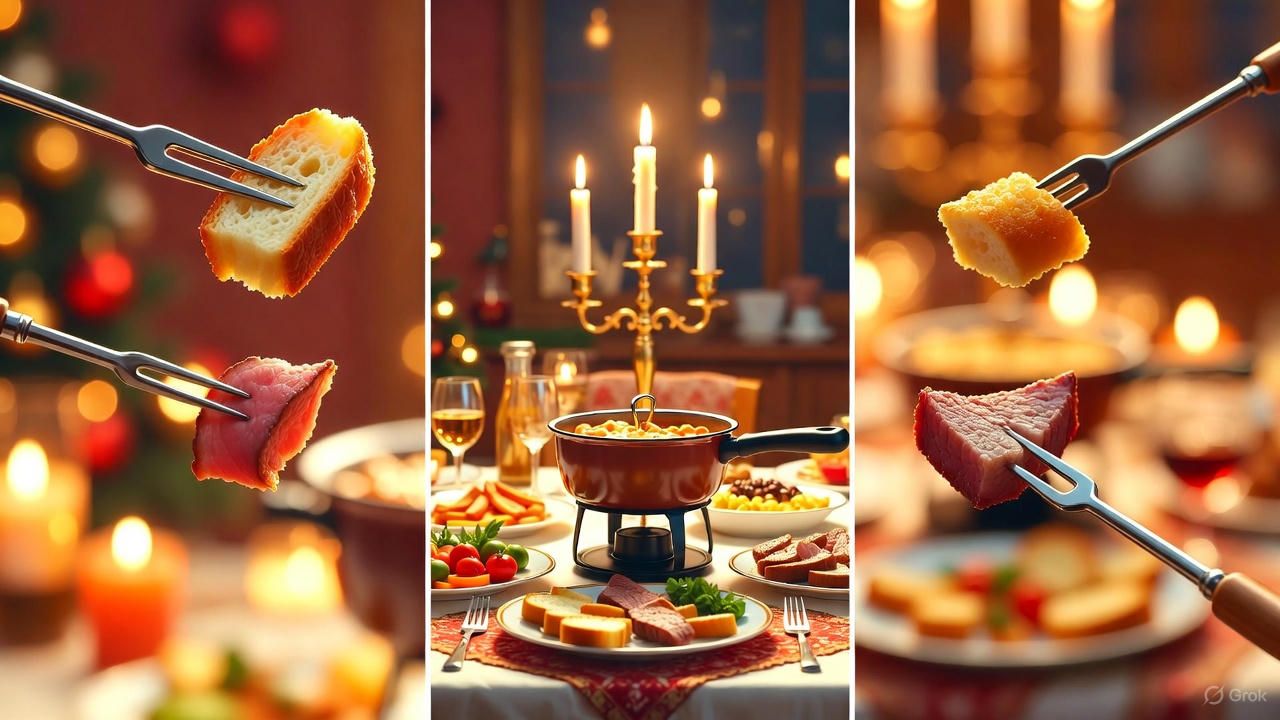
Merry Christmas!
I want to tell you about the time I stabbed myself with a fondue fork.
Every Christmas Eve, my family did fondue. It was our thing. We'd gather around the table with those little pots of hot oil and cheese, armed with those long, skinny forks, and spend the evening dipping bread and cooking meat and enjoying being together.
I was probably ten or twelve years old. Old enough to know better, young enough to not care.
If you've never done fondue, here's how it works: you stab a piece of meat with this long two-pronged fork, dip it in the hot oil, and wait for it to cook. Simple enough.
Unless you're me.
I was trying to get the fork through a piece of meat, and it wasn't cooperating. So I pushed harder. And harder. And then—finally—the fork shot through the meat and went straight through my own hand.
I just stared at it.
My whole family just stared at it.
There was a fondue fork sticking out of both sides of my hand.
Now, in most families, this would be a crisis. There would be panic, screaming, a rush to the emergency room. But my family was so used to something horrible happening to me at any given moment that everyone just kind of nodded like, "Yep. That tracks."
My dad calmly took me out to the garage—not the ER, the garage—grabbed some wire cutters, clipped the fork part off the stick, and pulled the whole thing out the other side of my hand.
Then he poured rubbing alcohol over it.
Which was lovely.
He wrapped it up, and I was good to go. Back to the table. Merry Christmas.
The next morning, my hand was too sore to open any of my own presents. My brothers had to do it for me while I supervised.
Just another Christmas at the Smalley house.
Why We Still Tell This Story
Here's the thing: that fondue disaster happened over thirty years ago. And we still talk about it. We still laugh about it. It's become part of our family identity—one of those stories that gets retold every holiday season.
"Remember when Michael stabbed himself with the fondue fork?"
"Remember when Dad pulled it out in the garage?"
"Remember when he couldn't open his presents?"
That's what traditions do. They create shared stories. They give families an identity, a history, a collection of moments that belong to you and no one else.
The tradition wasn't really about fondue. It was about being together. And even when things went hilariously wrong—especially when things went hilariously wrong—those moments became the glue that held us together across the years.
Traditions Create Connection
There's something powerful about doing the same thing, at the same time, year after year.
It creates rhythm in a chaotic world. Kids grow up knowing what to expect—and that predictability builds security. Adults have something to look forward to—an anchor in a year full of uncertainty.
Traditions don't have to be elaborate. They don't have to be expensive. They just have to be yours.
Maybe it's fondue on Christmas Eve. Maybe it's matching pajamas. Maybe it's watching the same movie every year, or driving around to look at lights, or making a specific recipe that's been in your family for generations.
The activity almost doesn't matter. What matters is that you do it together, and you keep doing it.
Over time, those repeated moments become the fabric of your family's story.
When Everything Changes, Traditions Anchor Us
December 2022 was my first Christmas after my world fell apart.
Nothing about that holiday looked like the ones before. The timing was off. The circumstances were completely different. We didn't even get to eat until 10 or 11 at night.
But you know what my adult kids wanted more than anything?
My meatballs.
See, I'd always made my classic meatballs and pasta sauce for Christmas Eve. That was my contribution, my tradition within the tradition. Year after year, that's what Dad brought to the table.
And even though everything else had changed—even though their mom wasn't there, even though we were eating at almost midnight, even though nothing felt normal—they wanted that one familiar thing.
They wanted something reliable. Something safe. Something that said, "This is still us. This is still Christmas. Dad's meatballs are still here."
So I made them. And we ate together at 11pm. And then we played Monopoly until it got a little too competitive. And somehow, in the middle of all that uncertainty, it still felt like Christmas.
The tradition didn't disappear. It just had a new twist—a different time, a different setting, a different configuration of people around the table. But the meatballs were the same. And that sameness held us together when everything else felt unfamiliar.
When Old Traditions Are Broken
But here's the hard truth: not everyone has traditions they can hold onto.
Maybe your family traditions are tied to people who hurt you. Maybe the holidays remind you of what you've lost—a marriage, a parent, a season of life that's gone forever. Maybe the traditions you grew up with are no longer possible, and Christmas just feels like a reminder of everything that's changed.
If that's you, I want to give you permission to do something important:
You can create new traditions.
You're not stuck with the old ones. You don't have to keep doing things that bring you pain just because "that's how we've always done it." You have the freedom to start fresh.
This might be the year you build something new.
Starting Over
If you're starting over this year—after divorce, after loss, after estrangement, after whatever broke your old traditions—here's my encouragement:
Keep what still works. Maybe the whole tradition isn't salvageable, but pieces of it are. My kids didn't need the entire Christmas Eve experience to be the same. They just needed the meatballs. Look for the parts worth keeping—even if everything around them has to change.
Start small with the new stuff. You don't have to reinvent Christmas overnight. Pick one thing. One meal. One activity. One moment you want to create and repeat.
Make it yours. It doesn't have to look like anyone else's tradition. It doesn't have to be Pinterest-worthy. It just has to mean something to you and the people you're building it with.
Give it time. New traditions feel awkward at first. They don't have the weight of history behind them yet. But if you keep doing them—year after year—they'll become the stories your family tells for decades.
Thirty years from now, someone might be laughing about the first Christmas you started that new thing. They'll say "remember when" and the whole room will smile.
That's the gift you're giving when you build traditions—even new ones.
The Real Gift
Christmas isn't about perfection. It's not about recreating some Hallmark movie version of the holidays. It's about presence. It's about showing up for the people you love and letting them show up for you.
Even if showing up means someone stabs themselves with a fondue fork and Dad has to do garage surgery.
Even if it means eating meatballs at 11pm because that's the only time everyone could gather.
Especially then.
Those imperfect moments? Those are the ones you'll remember. Those are the ones that become legends. Those are the ones that make your family yours.
So whatever your Christmas looks like today—whether you're surrounded by generations of tradition or building something brand new from scratch—be present. Make memories. And don't worry if things go sideways.
The best stories usually start with something going wrong.
Merry Christmas, fellow sojourners. I'm grateful to be on this journey with you.
If you're looking for community as you navigate life and relationships, check out Smalley Sojourners at smalleyinstitute.com.
You can text me at (303) 435-2630 or email [email protected].
What's your favorite family tradition? Or what new one are you starting this year? I'd love to hear about it in the comments.
Discover the hidden relationship killer destroying most marriages (and how to stop it).
Join me twice a week for real transformation!
I'll send you proven strategies for your marriage, spiritual growth, trauma healing, and recovery. No generic advice—just what actually works from 30+ years in the trenches.
I hate SPAM. I will never sell your information, for any reason.