How to Survive the Drive (Without Anyone Getting Left at a Gas Station)
Dec 10, 2025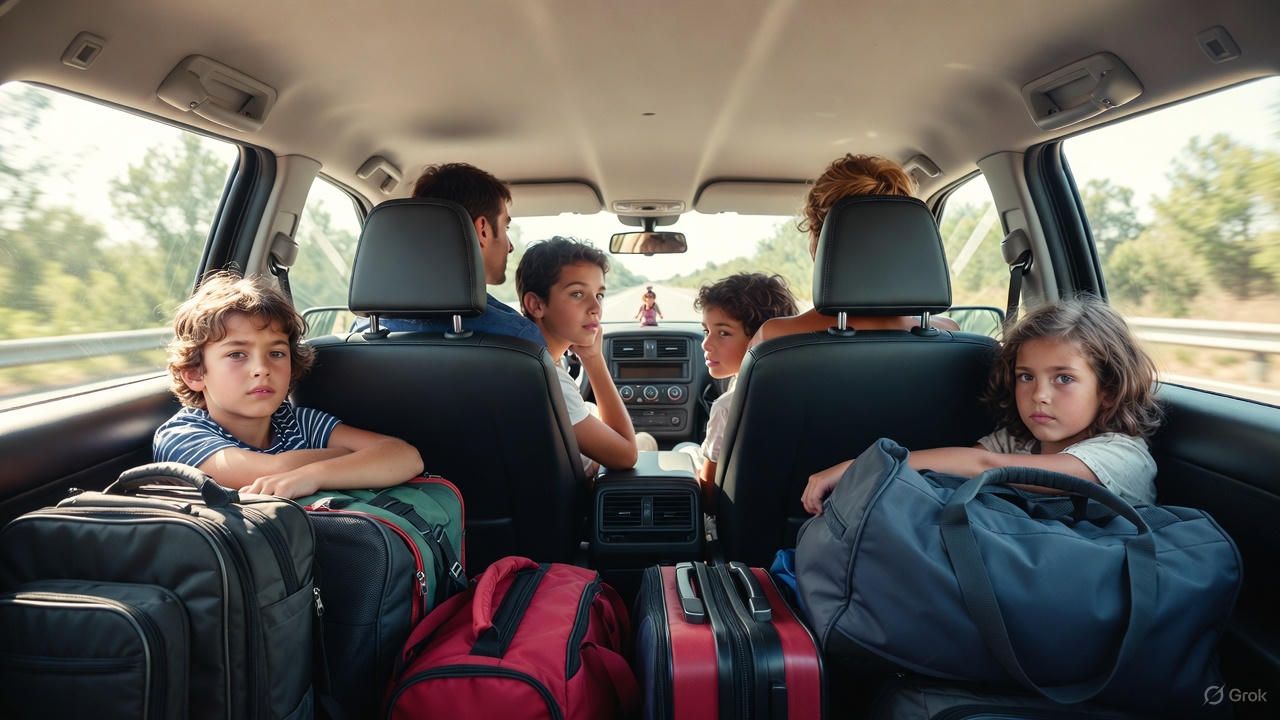
Picture this.
It's 6:47 AM the day after Thanksgiving. You're in the car with your spouse, three hours into a seven-hour drive to your in-laws' house. The kids have already asked "are we there yet?" fourteen times. Someone spilled goldfish crackers into every crevice of the backseat. The audiobook you both agreed on has somehow become the most annoying narrator in human history.
And then your spouse misses the exit.
Not just any exit. THE exit. The one you specifically mentioned five minutes ago. The one that was clearly marked. The one that now adds forty-five minutes to an already endless drive.
You have a choice to make.
Do you say something? Do you let out that heavy sigh you've been perfecting since 1987? Do you mutter "I literally just said to take that exit" under your breath but loud enough to be heard?
Or do you remember that you're trapped in a moving vehicle with this person for the next four hours and maybe—just maybe—you should think before you speak?
Welcome to the holiday drive. Buckle up.
Why Cars Turn Normal People Into Monsters
There's something about being in a car that makes conflict ten times worse than it needs to be.
First, you're trapped. You can't walk away to cool down. You can't go to another room. You can't suddenly need to check on laundry. You're stuck in a metal box hurtling down the highway with no escape.
Second, travel is already stressful. You woke up too early. You're worried about traffic. You're dreading Aunt Linda's comments about your life choices. Your baseline stress level is already at a seven before anyone even says anything annoying.
Third, one person is driving. They can't fully look at you. They can't have a proper conversation. They're trying to navigate traffic while also apparently defending their entire character because they missed one exit.
Fourth—and this is the big one—every little thing feels bigger than it is. That comment about the exit? It's not really about the exit. It's about feeling unheard. Or being criticized. Or the forty-seven other small things that have been building up.
The car becomes a pressure cooker. And pressure cookers, as we know, tend to explode.
The Four Questions That Could Save Your Trip
Here's what I've learned: surviving the drive isn't about stuffing down your feelings or pretending everything is fine. It's about creating a tiny bit of space before you react.
Before you say that thing you're about to say, ask yourself four questions.
Question 1: Is this a life or death issue?
Seriously. Is anyone going to die because of what just happened?
The missed exit? Annoying, but not fatal. The way they loaded the suitcases? Inefficient, but everyone survives. The fact that they bought the wrong snacks at the last gas station? A tragedy, but not a medical emergency.
Most of the things we fight about in cars are not life or death. They feel urgent in the moment because we're stressed and trapped. But they're not actually emergencies.
If nobody is in danger, maybe you can let it go.
Question 2: Could I be judged for the same thing?
This one stings a little.
Before you criticize how they're driving, ask yourself: Am I a perfect driver? Before you snap at them for forgetting something, ask yourself: Have I ever forgotten anything? Before you get frustrated at how they're handling the kids, ask yourself: Do I always handle the kids perfectly?
The answer is almost always no.
We have this amazing ability to extend grace to ourselves and withhold it from everyone else. We understand our own mistakes because we know the context. We judge other people's mistakes because we only see the outcome.
If you'd want grace for the same thing, maybe extend some.
Question 3: Should I wait, even just five minutes?
This is the simplest question and possibly the most powerful.
In the heat of the moment, everything feels urgent. You need to say something RIGHT NOW or you'll explode. The words are right there. They need to be released immediately.
But what if you waited five minutes?
What if you took a breath, looked out the window, and just let five minutes pass before you decided whether to say anything?
Here's what usually happens: the thing that felt so urgent starts to feel less important. The anger settles. The perspective returns. And often, you realize you don't actually need to say anything at all.
Five minutes. That's it. You can do five minutes.
Question 4: What's my goal in saying this?
This is the question that separates helpful communication from destructive communication.
If you're about to say something, ask yourself: What do I actually want to accomplish here?
Do you want to shame them? Make them feel bad about what they did? Get a little revenge for how annoyed you are?
Do you want an apology? Need them to acknowledge they messed up so you can feel validated?
Do you want to correct something? Actually solve a problem or prevent it from happening again?
Be honest with yourself.
If your goal is to shame, don't say it. Shaming your spouse in a moving vehicle will not improve your relationship or your road trip. It will make the next four hours absolutely miserable for everyone, including the kids pretending to be asleep in the backseat.
If your goal is an apology, ask yourself if you really need it right now, while they're driving, while everyone is stressed. Can it wait until you're not trapped together?
If your goal is to genuinely solve a problem—and you can say it kindly, without an edge—then maybe it's worth a calm conversation. But check your tone first. And maybe still wait five minutes.
The Secret: Keep It Positive
Here's the real secret to surviving the drive: give each other the benefit of the doubt.
Your spouse didn't miss the exit to ruin your day. They missed it because they were distracted, or the sign was confusing, or they were trying to listen to your story about Aunt Linda.
They didn't pack the car wrong to personally offend you. They just packed it differently than you would have.
They're not trying to drive you crazy. They're just a human being, stressed out, trying to get the family to grandma's house in one piece.
When you assume the best about each other—when you give grace before judgment—everything changes. The small annoyances stay small. The missed exit becomes a funny story instead of a forty-five minute silent treatment.
You're on the same team. You're not opponents trapped in a car together. You're partners, navigating holiday chaos together.
Act like it.
A Survival Checklist for the Drive
Before you leave:
- Accept that something will go wrong. It always does. Expecting perfection sets you up for frustration.
- Agree on music, podcasts, or audiobooks ahead of time. This prevents the passive-aggressive aux cord battle.
- Pack more snacks than you think you need. Hunger makes everything worse.
During the drive:
- When something annoying happens, take a breath.
- Ask the four questions before you say anything.
- Give each other the benefit of the doubt.
- If you need to address something, wait until a rest stop. Conversations are easier when no one is operating heavy machinery.
When you arrive:
- Celebrate that you made it. Seriously. You survived the drive. That's worth acknowledging.
- Let go of any small grievances from the road. They don't need to follow you into grandma's house.
- Remember that you'll have to drive back together. Keep the relationship intact.
The Gift of a Peaceful Drive
The holidays are stressful enough without turning the car into a battlefield.
This year, give yourself and your family the gift of a peaceful drive. Not a perfect drive—those don't exist. But a drive where everyone arrives at the destination still speaking to each other. Where the missed exits become funny stories. Where the stress of travel doesn't turn into relationship damage.
Keep it positive. Give the benefit of the doubt. Ask the four questions.
And nobody gets left at a gas station.
Ready to transform how you handle conflict—in the car and everywhere else? Check out my online courses at smalleyinstitute.com or reach out about coaching.
You can also text me at (303) 435-2630 or email [email protected] if you need help figuring out next steps.
What's your worst holiday road trip story? And how do you keep the peace in the car? Share in the comments—we could all use some survival tips!
Discover the hidden relationship killer destroying most marriages (and how to stop it).
Join me twice a week for real transformation!
I'll send you proven strategies for your marriage, spiritual growth, trauma healing, and recovery. No generic advice—just what actually works from 30+ years in the trenches.
I hate SPAM. I will never sell your information, for any reason.